Thursday, August 4, 2022
Need a Gift Idea For Your Parents? Picture This!
Monday, July 11, 2022
How To Treat A 57-year-old Woman
If you’re an 8-year-old son in a
family who has just welcomed a new baby and you’re impressed with the meal she made
to help out your mom, you dig into the Butterfingers Delight for a second
helping and exclaim, “This should be called ‘Hallelujah Dessert’!”
If you’re a young lady from her
church and you’re taking part in the feet-washing aspect of a Communion Sunday
service for the first time and she offers to partner with you at the water
basin, you accept. When it is your turn to kneel and “gird the towel” for her,
your glance takes in her skinny toes and cracked heels, but you look up and
tell her, “I don’t know if anyone ever told you this before, but you have
beautiful feet.”
If you’re her dad, and on her
birthday you’re far away from her home and away from your own home at a church
function, you take a break after lunch and go for a bit of a walk away from the
noise and bustle of the event so you can phone her. In the conversation, you
reminisce about the day she was born (It was just as brilliantly sunny as this
day is, and you were so excited about being dad for the first time – to TWO
baby girls – that you could hardly keep your feet on the ground) and ask her the
familiar questions such as “Are you doing anything special to celebrate?” and
then just before ending the call, you gather up your fatherly affection and
advice and affirmation and roll it into one heartfelt statement: “Love you,
Daughter.”
If she’s not your mom
biologically or otherwisely, (after all, you’re old enough to be her
mom) but she has mothered you in kind of a roundabout way, you send her a card
and/or call her to wish her a Happy Mother’s Day. With genuine pleasure you
enter into the joy of her family gathering ‘round and rising up to call her
blessed. (This in spite of your personal never-to-be-fulfilled longing to have
your own children and grandchildren.)
If you’re a peer of hers who
knows your way around in the areas of food, art, politics, and nearly
everything else better than she does, you enjoy hanging out with her anyway.
When you ride with her to a ladies’ party at a restaurant in town, and she’s
maneuvering the route in the city rather confidently, you declare, “You drive
these back streets like a pro!”
If you notice her love of
photography and you’re a noticer of beauty/lover of creativity yourself, you
send her a note including the words “…thank you so much for faithfully taking
and sharing your beautiful photos. It’s not listed as a spiritual gift, it
certainly seems akin to being one, in my opinion. To realize the beauty of
little moments and scenes, and then to be willing to pause and be present
enough to take a photo of them…”
If you wear titles such as Prolific
Writer of Books as well as The Ann Landers of MennoWorld, and you happen to
have a little “writery” tete-a-tete with her at a conference, you (in the midst
of your Opinions on a certain subject) listen to her piece of wisdom (that
she’s not even giving as such), and then you turn around and quote her in one
of your blog posts because her “What would you advise instead?” stinger of a
question would not stop buzzing in your head.
If you’re a reader (male or
female) of Dani’s Discoveries, you sometimes stop and tell her, when you see
her and she’s least expecting to hear it, that you read her blog. And you make
it sound like reading it is an enjoyable experience.
If you’re someone who has just
read this blog post, instead of thinking that wow, now there’s one 57-year-old
woman who is obsessed with affirmation, you acknowledge the impact of a word
fitly spoken. You decide that when something impresses you favorably about
someone, be they 7 or 57 or 97, you’ll take a moment to mention it to them in
sincerity. You realize that they could get all shy or inwardly spluttery about
it. (Pretty dress, what!? This ancient, faded, “pilly” thing? I wasn’t planning
to wear it to town, but I forgot to change before coming to McDonald’s!) But
you do it anyway, because you just might make their day. Or month. Or year.
Thursday, May 12, 2022
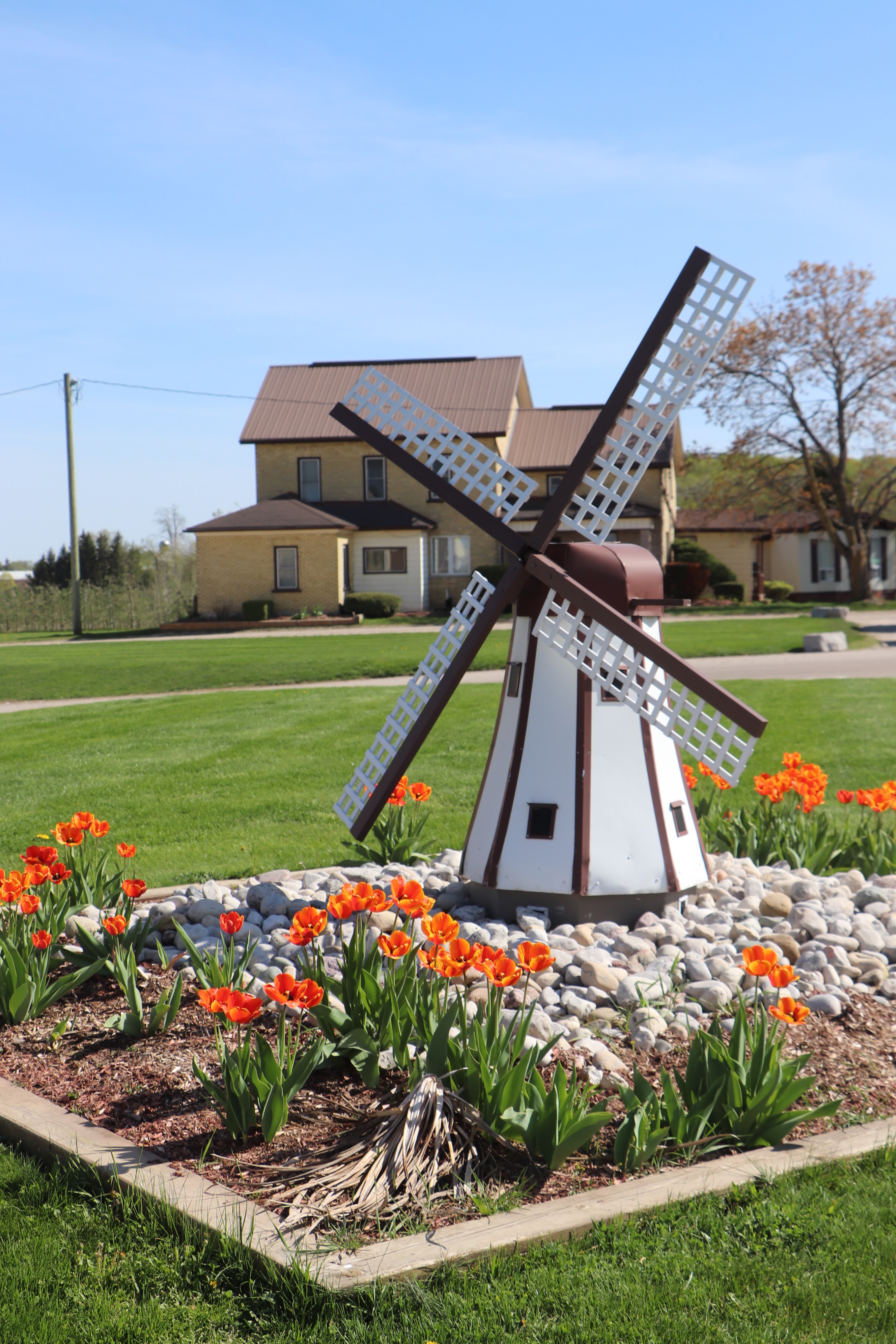
Signs and Other Signs of Spring
Friday, April 15, 2022
Re-membering Passover
One evening last month Ken and I had the privilege of partaking in a Passover meal. When Steve (Ken's brother) & Rose asked us to join them and several other friends in commemorating this Jewish tradition, we were delighted to accept the invitation.
It wasn't the first time for Steve & Rose to host a gathering like this. Occasionally sharing a Passover meal with a group of friends in their home has come about in recent years because of their relationship with a young man named David. Following a serendipitous meeting with him at a local farmers' market about a decade ago, they gave David a home with their family for a week. Ever since then, their acquaintance has been developing into a comfortable and rich friendship.
Among the many valuable things I've learned from the example of Ken's family over the years is the joy of accepting and learning from people of nationalities and cultures different than our own. It was a treat to taste of this delight as Steve & Rose welcomed us guests into their friendship with David and into his knowledge of Passover. David is not a Jew but a Christian who has an intense love of studying scripture and Jewish traditions.
For a Christian to celebrate Passover is to correlate the Israelites' Exodus story and the coming of Jesus for our salvation. The meal is highly significant; it is full of symbols of Jesus' death, burial, and resurrection. No wonder our invitation said the meal would be lengthy with the "symbolism of each dish explained as we go" and that we should "be prepared for a very worshipful and meaningful evening".
Our group of 11 that evening was almost as varied as the group of disciples that met with Jesus for the Last (Passover) Supper. From farmer to funeral director assistant, minister to musician, secretary to stay-at-home mom, we were all grateful to be chosen to share the communal meal called Passover. As we gathered together for this "festival of freedom", in a sense we met to re-enact and re-member that long-ago release from bondage in Egypt as well as the looking forward to a coming Messiah.
The first event of the evening, the Leaven Search, took place before we sat at the table for the Passover meal. To typify the purge of leaven that happens in Jewish homes for eight days prior to Passover, we searched for a small piece of leavened bread that had been hidden somewhere in the house. Ken found the little bread roll in Rose's china cupboard. Unleavened bread is part of the Passover meal because it is a reminder of the haste in which the Israelites left Egypt - there was no time for the bread to rise before their sudden departure on Passover night. Leaven is also a type of sin. Sin puffs us up. It is also hidden and sneaky. I Cor. 5 talks about purging out the old leaven: "For even Christ our passover is sacrificed for us: therefore let us keep the feast, not with old leaven, neither with the leaven of malice and wickedness; but with the unleavened bread of sincerity and truth."
Throughout the meal we had the traditional four cups of wine (in our case, non-alcoholic grape beverage). These four cups, sanctification, deliverance, redemption, and restoration, correspond with four promises made to Israel by God: "I will bring you out"; "I will deliver you"; "I will redeem you"; and "I will take you to be my people". (Exodus 6:6) An interesting aspect of drinking the second cup was first dipping our finger into the wine and shaking 10 drops onto our plate to signify God's wrath in the ten plagues.
There was an empty chair and place setting at the table for Elijah. In a traditional Passover celebration, Jews provide this for the coming Messiah. At the end of the meal, they also open a door to the outside and look for him coming. As Christians, we viewed the unoccupied place at the table as a reminder of the Unseen Guest - our Already-come Messiah, and the gazing into the skies through the open door as a looking for Jesus in His second coming.
At the beginning of the meal, David brought to the table three linen-wrapped pieces of unleavened bread called matzah (matzot is plural for matzah). The symbolism soon became evident as David unwrapped the middle piece and broke it, wrapped it back up, and "hid" the cloth package in the dining room. Typically, the children at a Passover meal search for the hidden bread and a leader of the group pays a ransom to the child who finds it. After the ransom is paid, the piece is eaten by all. My heart felt so full as I made the connections while David led us through the steps. Jesus, God the Son, second person in the Trinity, became bread for us. His body was broken in death on the cross, bound in linen strips of cloth, hidden away in a tomb for three days, and then was found fully alive again. Since that price has been paid for our atonement, we can all partake of that Bread...
We broke bread together around the table there that evening. Breaking the matzah not only is symbolic of breaking with our sinful past, but also of the breaking of Christ's body for us. The pattern in modern matzah is striped and pierced full of holes, also reminding us of the stripes on Jesus' back from the scourging He endured, as well as the nail-holes in His hands and feet and the spear-hole in His side.
Another symbolic part of the meal was eating the herbs. The bitter herbs - in our case, horseradish - were strong enough to make one's eyes water. This was a reminder of the suffering of the Israelites in Egypt, and of the bitterness of our lives without salvation. The parsley also was dipped in salt water, representing the tears of affliction. The greens in a Passover meal, parsley and Romaine lettuce, represent life (newness of life out of bondage) and are also symbolic of the cleansing hyssop the Israelites used to apply the blood on the doorposts of their house for the death angel to see and pass over.
The lamb and the roasted vegetables rounded out our platefuls, and were a delicious part of the feast.
The dessert was charoseth, or haroset, traditionally a mixture of apples, nuts, cinnamon, and wine. It represents the mortar the Israelites used to make bricks while they were slaves in Egypt. It was a sweet and tasty end to the meal. I read later that the haroset is a reminder to us that even the most difficult circumstances in life are made sweet by the promise of future redemption.
Probably the most compelling part of the evening for me was the time at the close of the meal in which we got up from the table and stood behind our chairs to sing a hymn together: We're Marching to Zion". The Jews traditionally drink the last cup and say "Next year in Jerusalem" at the end of Passover, closing the celebration with the wish for all Jews everywhere to be able to return to their homeland, like they did after leaving Egypt. So we did too. All of us around Steve & Rose's table joined our voices together saying "Next year in Jerusalem!"
Thinking about us Jesus-followers living in exile here and longing for that day when we shall return to our Homeland and reign forever with our King just kind of wrecked me. In a good way.
Joy washed over me as I pictured us all celebrating together in the presence of our Passover Lamb. I let the tears come.


.jpg)